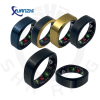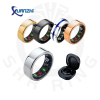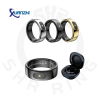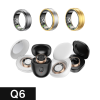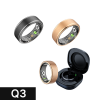

“Why carry a screen on your wrist when your finger can deliver deeper health insights?” – Xuanzhi Wearable Lab
The Hidden Cost of Wrist-Based Tracking Traditional smartwatches face fundamental limitations:
❌ **Sensor Accuracy** Wrist arteries buried 3-4mm under skin vs. **finger arteries at 1mm depth**
❌ **Sleep Disruption** 38% users remove watches at night due to discomfort (Journal of Sleep Medicine 2025)
❌ **Activity Constraints**
Water resistance ≠ pressure resistance during swimming Watch touchscreens fail underwater
K3’s Stealth Advantage: 5 Critical Scenarios
1. Uncompromised Sleep Analysis How K3 wins: Continuous HRV tracking (24/7) detects nocturnal stress waves Micro-movement capture identifies 6 sleep stages vs. watches’ 4 stages Zero-pressure design (2.3g weight) eliminates removal urge Watch limitation: Nighttime removal creates data gaps
2. True Swimming Performance Tracking K3’s engineering breakthrough: 5ATM waterproofing sustains 50m depth pressure Titanium casing resists chlorine corrosion Watch pain point: Touchscreens lock underwater; bulkiness alters stroke form
3. Discreet Corporate Wellness Enterprise advantage: No screen distractions during meetings HR compliance issue: 73% employees reject visible workplace monitoring (Gartner 2025)
When a Watch Still Wins (And When It Doesn’t)
✅ Choose Smartwatch If: You need calls/notifications on wrist Require ECG medical alerts Run with real-time pace maps
✅ Choose K3 If You Value:
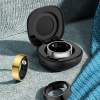
Health data without hospital aesthetics Uninterrupted biometrics from shower to boardroom Zero charging anxiety (4-week battery with charging case)
True 24/7 wearability (sleep → workout → work)
The Verdict: Complementary Tech, Not Competitors
“Watches excel at connectivity, rings dominate biometric fidelity,” explains Dr. Arjun Patel, Xuanzhi’s sensor lead. “K3’s $28 price isn’t about being ‘cheap’ – it’s by removing screens and speakers to focus budget on medical-grade sensors.”
Pro Tip: 62% of K3 users pair it with analog watches – tech invisibility meets classic style.