The $11B Finger — Why Wall Street Just Backed the Smart Ring
2026-07-03
No screen. 4 grams. A $11 billion valuation. In May 2026, Finnish smart ring maker Oura quietly filed for a U.S. IPO — and suddenly, the “niche” wearable everyone ignored is the fastest-growing category in consumer health tech.
Why a Ring? Why Oura?
The core physics is simple: capillary density on the finger > wrist → resting HR, HRV, SpO₂, skin temp all come back more stable than a watch, especially overnight.
Oura didn’t chase workouts. It chased sleep — the one thing people do every night but watches suck at (bulky, glowing, 1–2 day battery). That single wedge turned into three compounding loops:
-
All-night wearability → near-100% data continuity
-
7–12 day battery → no charging anxiety
-
Hardware + $5.99/mo membership → the “rent-collecting” model public markets love
Then Oura pushed medical: FDA-track glucose risk (with Dexcom), U.S. military tens of thousands of units, insurance pilots. It’s not selling sleep scores anymore — it’s selling the continuous health data entry point.
What Oura Tracks (Ring 4 / Ring 5)
-
Sleep: deep/light/REM, efficiency, nighttime SpO₂, skin temp trend
-
Recovery: HRV, Readiness score (“train or rest today?”)
-
Heart: resting HR, AFib path, cardiac alerts
-
Women’s health: cycle signals, fertile window
-
Stress: daytime stress index, recovery prompts
-
Plus: Dexcom CGM integration (glucose risk insights, select regions)
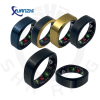
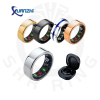
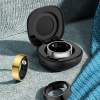
Ring 5 (May 2026): 40% smaller than Ring 4, 2.28mm thick, 2–2.69g, more sensors, 6–9 day battery — still the “world’s smallest” title.