
“Just breathe” feels insufficient when your body needs targeted recovery. What if you could see exactly when and why to meditate, with guidance that matches your physiological state?
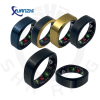
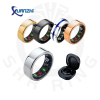
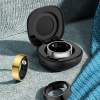
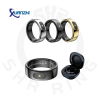
While many wearables can track stress, few help you understand its specific patterns and provide the right tools to address it. The SHR Ring K3 from Xuanzhi introduces a smarter approach to recovery—one that gives you deep insights into your stress patterns and connects them to a comprehensive library of meditation exercises.
Most stress tracking falls short because it:
Shows you when you’re stressed, but not the underlying patterns
Leaves you guessing which relaxation technique might work best
Provides data without connecting it to actionable solutions
The Missing Connection: Understanding your stress biometrics and having immediate access to the right meditation practice for your current needs.
The K3 creates a powerful feedback loop through its integrated system:
1. The AI Health Analyst: Decoding Your Stress Patterns
The K3’s advanced sensors provide unprecedented clarity about your stress and recovery states:
HRV Pattern Analysis: Our system tracks your Heart Rate Variability trends to identify whether you’re experiencing mental stress, physical fatigue, or optimal recovery—each requiring a different approach.
Stress Timeline Mapping: By monitoring your heart rate, skin temperature, and activity levels, the K3 helps you see exactly when stress occurs throughout your day and how long it typically lasts.
Recovery Progress Tracking: Watch how specific meditation practices actually impact your biometrics over time, giving you concrete evidence of what works for your body.
2. The Meditation Toolkit: Right Practice, Right Time
While the K3 doesn’t automatically push meditation suggestions, it empowers you to make smarter recovery choices:
Stress Breakdown: See exactly what type of stress you’re experiencing and choose from our categorized meditation library:
Acute Stress → 3-5 minute breathing exercises
Chronic Tension → 10-15 minute body scan meditations
Sleep Preparation → Wind-down sequences
Mental Fatigue → Focus restoration practices
Biometric Feedback: After each meditation session, see how your heart rate, HRV, and other metrics responded, helping you identify which practices are most effective for you.
Mark, a software developer and K3 user, describes his experience:
“I used to meditate randomly, never sure if it was helping. Now when I feel stressed, I check my K3 data first. If I see my HRV has been low all day, I’ll do a longer restoration meditation. If it’s just a temporary stress spike, a quick breathing exercise brings my metrics back to normal. Seeing the biometric feedback has completely changed how I approach stress management.”
This approach works because it aligns with how your nervous system actually functions:
Precision Understanding: By knowing exactly what type of stress or recovery state you’re in, you can choose interventions that specifically target that physiological condition.
Evidence-Based Progress: The biometric feedback provides concrete evidence of what’s working, turning meditation from an abstract practice into a measurable tool for physiological change.
Personalized Evolution: Over time, you’ll discover which meditation types, durations, and timing work best for your unique physiology and lifestyle.
The K3 helps you develop deeper self-awareness and more effective coping strategies:
Pattern Recognition: Identify your personal stress triggers and optimal recovery windows
Method Effectiveness: Discover which meditation techniques deliver the best results for your body
Progress Validation: See measurable improvements in your stress resilience over time